One of the most popular she shed ideas is also one of the most rewarding: a small studio for painting, drawing, sewing or crafts. Having a dedicated space means you can leave a project out on the table, come back to it whenever you have half an hour, and keep paint and glue well away from the kitchen table. A shed does not need to be large to work well as a studio, but it does need some planning. Here is how to get the basics right.
Plan the layout around your work surface
The work table is the heart of any studio, so decide where it goes before anything else. In most sheds the best spot is directly beside or under the largest window, where daylight falls across the surface. Leave enough room behind your chair to push it back and stand up comfortably, and make sure the door can open without hitting anything.
Think about how you actually work:
- Drawing and illustration benefit from a table with an adjustable, tilting top, which is easier on the neck and shoulders during long sessions.
- Painting needs a surface that can take spills, plus a spot for water jars and a place for wet work to dry.
- Sewing and crafts usually need a wide, flat table with room to spread fabric or materials.
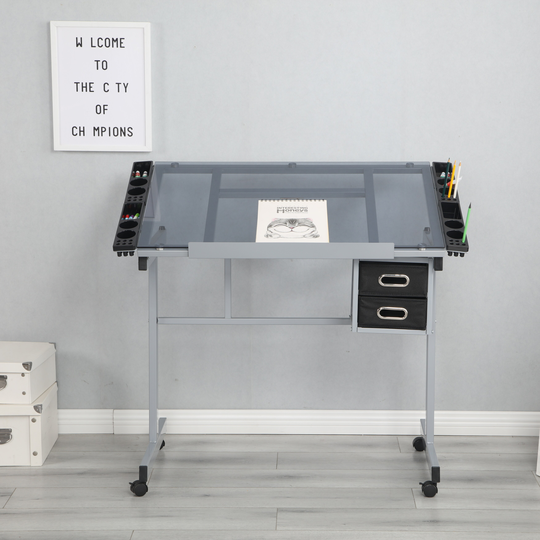
A height adjustable desk on lockable wheels, such as this adjustable art drawing desk, can be rolled towards the window on a grey day and tucked against the wall when you need floor space. You can compare more options in the art table range.
Get the light right
Good light matters more in a studio than almost anywhere else, because it affects how you see colour and detail.
Daylight. North facing windows give the most even light through the day in the northern hemisphere, which is why many artists prefer them. If your windows face the sun, a sheer curtain or blind softens harsh light and reduces glare on the work surface.
Task lighting. An adjustable desk lamp with a flexible arm lets you direct light exactly where you need it in the evening or in winter. Choose bulbs described as daylight or neutral white if colour accuracy matters to you.
General lighting. A ceiling light or a couple of wall lights keeps the rest of the room from feeling gloomy. Layering several light sources is far more comfortable than relying on one bright fixture.
Storage that keeps supplies in order
Art and craft supplies multiply quickly, and in a small room clutter soon takes over. A few storage ideas that work well in sheds:
- A set of shallow drawers for paper, prints and drawings, so they stay flat.
- Clear boxes or labelled tubs for paints, pens and small tools, so you can see what you have.
- Wall shelves or a pegboard above the table to keep everyday items within reach without using floor space.
- A rolling trolley that moves to wherever you are working.
- Hooks on the back of the door for aprons, bags and rolls of fabric.
Store anything flammable, such as solvents, in closed containers and follow the storage advice on the label.
Protect your work through the seasons
A garden shed can be colder, damper and more prone to temperature swings than the main house. Paper can cockle in humidity, some paints and glues do not like freezing, and finished work can fade in strong sun.
Insulating the walls and roof, sealing gaps around the door and window, and allowing for some ventilation all help keep conditions more stable. A small heater suitable for the size of the room makes the studio usable in colder months, but never leave it running unattended. Keep finished pieces and good paper in closed drawers or folders, and consider bringing the most sensitive materials indoors over winter.
Finally, add a few personal touches. A comfortable chair, a rug under your feet, a pinboard for inspiration and a plant or two on the windowsill all make the space feel like your own. Good interior design is just as relevant in a small studio as in a living room: when a space is practical and pleasant, you will find yourself going out to the shed to create far more often.